
Edited by Victoria Bautista Lenkeit, Dendron
How WOOD4LIFE is turning its action plan on fragmented forest ownership into territorial engagement, technical support and collective forest management in Castilla-La Mancha
Forest fragmentation is not simply a question of how land is divided on a map. In many rural areas, it can determine whether managing forests is technically and economically viable.
In Castilla-La Mancha, small and highly fragmented private holdings can make it difficult for forest owners to plan silvicultural operations, mobilise timber, access resources and services, or participate effectively in the forest-to-wood value chain. Addressing this challenge is part of WOOD4LIFE’s first specific objective: strengthening collective forms of organisation that can support sustainable forest management and help tackle forest fragmentation and abandonment.
Dendron’s work in Castilla-La Mancha has followed a clear sequence: understand the existing governance structures and the barriers faced by forest owners, translate that diagnosis into an action plan, and then work directly in the territory to turn planning into collective action.
Starting with the territory, not with a predefined model
During WOOD4LIFE’s preparatory phase, Dendron led the Castilla-La Mancha work under Deliverable D3.3, “Action plans for forest associations in the wood value chain”. The aim was to understand how existing associations and other forms of collective management operate, what difficulties they face and how they interact with the forestry and wood sector.
The work combined the identification of existing structures with direct consultation. The purpose was not to find a single model that could be replicated in exactly the same way everywhere. Some areas already have associations that need to be reactivated or strengthened; in others, interested forest owners have not yet formed a formal organisation. Available forest resources, local priorities and relationships with other sector actors also differ from one territory to another.
The analysis helped identify where collective organisation could remove practical barriers to forest management and what type of support each territory might require. The result was an action plan to promote forest owner associations as a tool for improving forest management, while also considering opportunities linked to forest resources, timber and ecosystem services.
Why collective management matters
For an individual forest owner, fragmentation can become a problem of scale. A forestry operation that makes technical sense across a continuous area may be much harder to carry out when that same area is divided among many owners. Decisions and operations must be coordinated, and the volume of timber available from a single holding may be too small to make certain forestry operations viable or to access favourable market conditions.
Associations and other forms of collective management allow this challenge to be addressed at a different scale while each owner retains ownership of their land. They can make it easier to plan operations across larger areas, mobilise timber collectively, reduce certain management costs and improve access to technical advice and new opportunities.
This is particularly relevant to WOOD4LIFE, which connects sustainable forest management with ecosystem services and with a value chain capable of directing suitable timber towards long-lasting wood products. Highly fragmented ownership makes it more difficult to establish these connections at the scale required.
From the action plan to direct support
Completing D3.3 did not mark the end of the process. The next step has been to put the diagnosis into practice through technical assistance and territorial engagement.
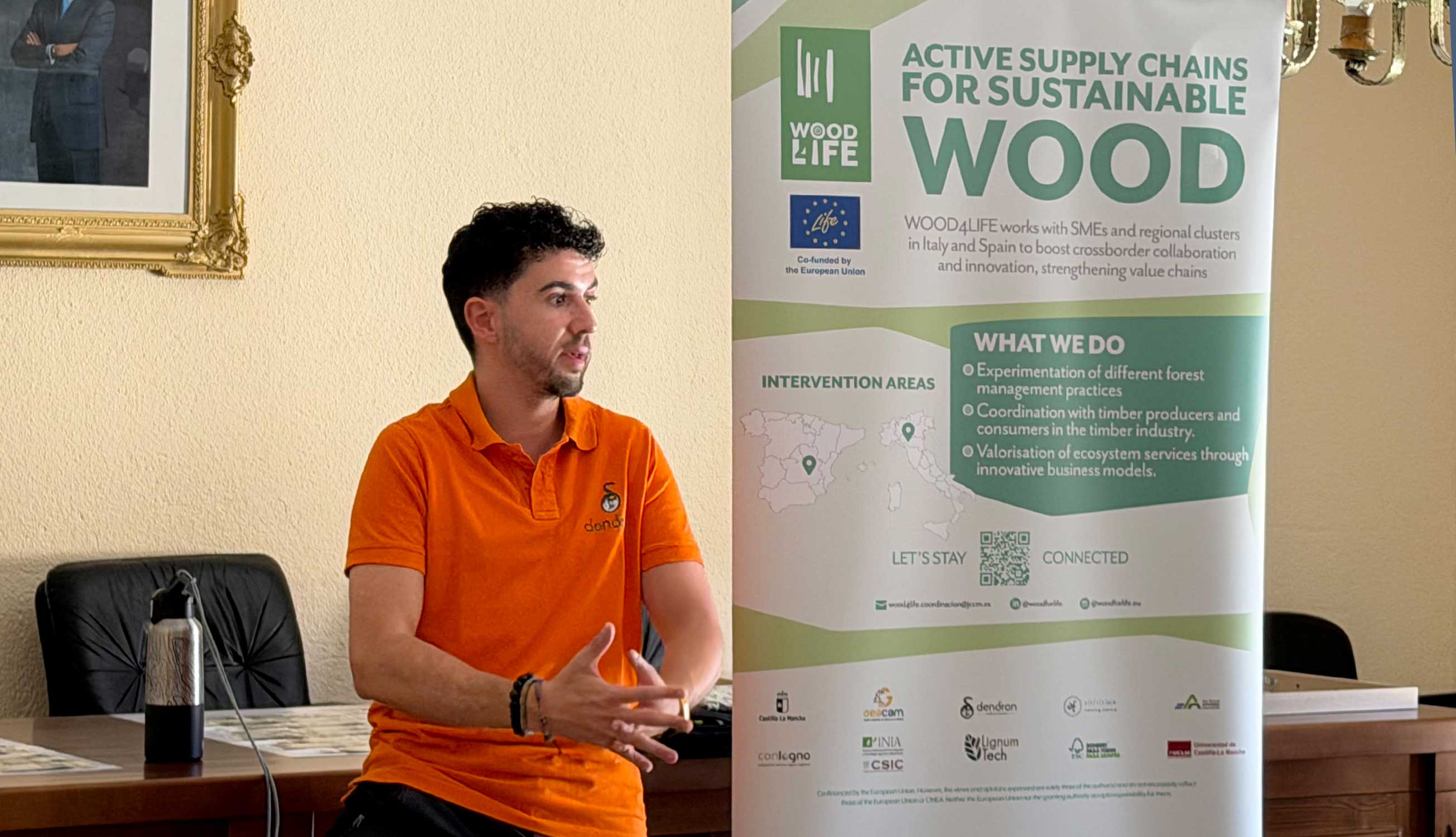
One of the tools for doing this is the WOOD4LIFE Helpdesk, coordinated by Dendron and aimed at forest owners and associations in Castilla-La Mancha. Depending on each situation, support can include reviewing legal and organisational aspects, carrying out an initial technical assessment, identifying opportunities for collective management, defining a roadmap and facilitating dialogue between owners and other actors.
The aim is not to direct every group of owners towards the same organisational model, but to understand their starting point and objectives and identify the most appropriate way forward. A support service alone, however, is not enough. In rural areas affected by depopulation, where many forest owners live outside the municipalities in which their land is located, it is also necessary to work directly in the territory.
Tour de la Sierra: taking the action plan into the territory
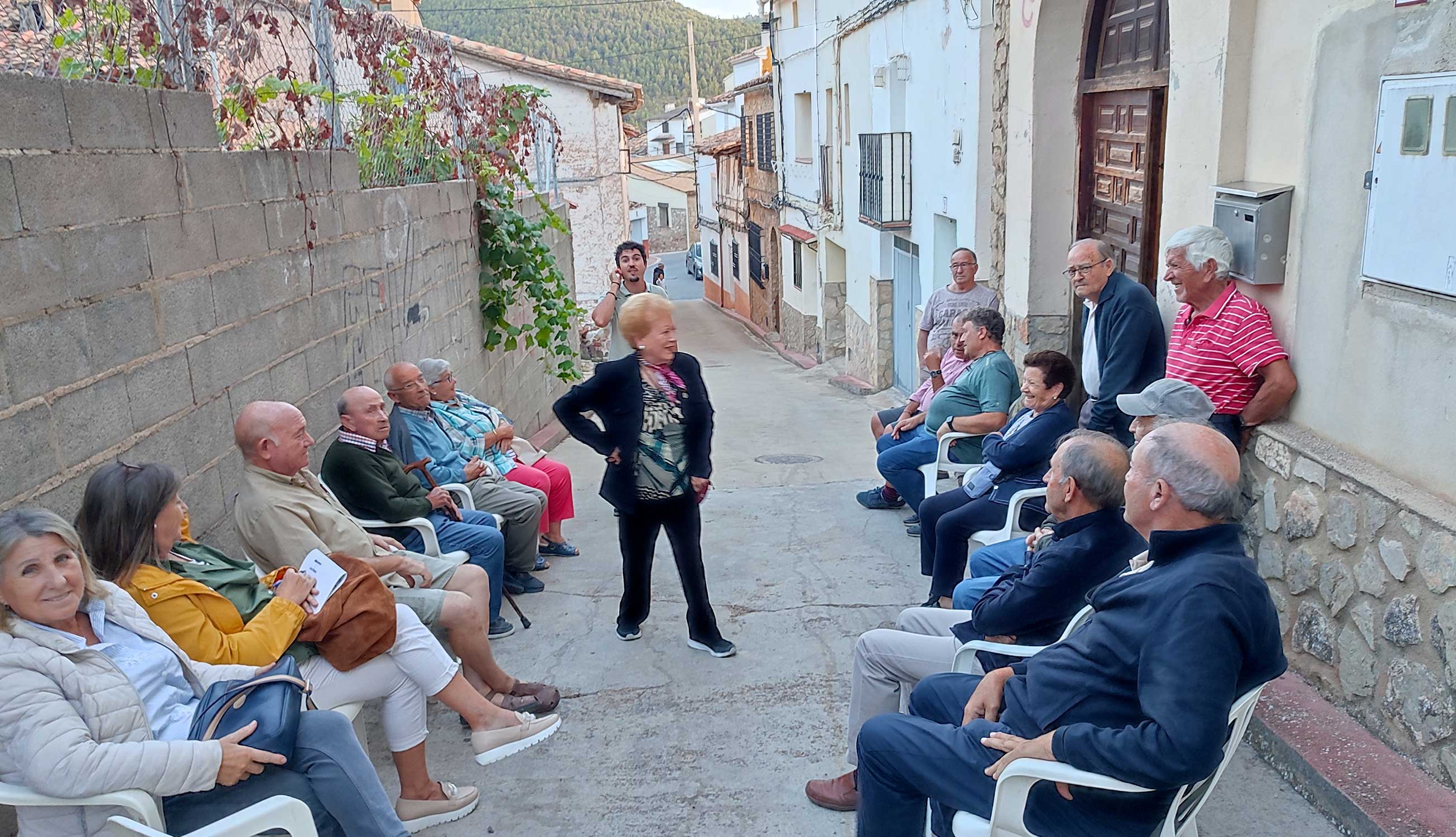
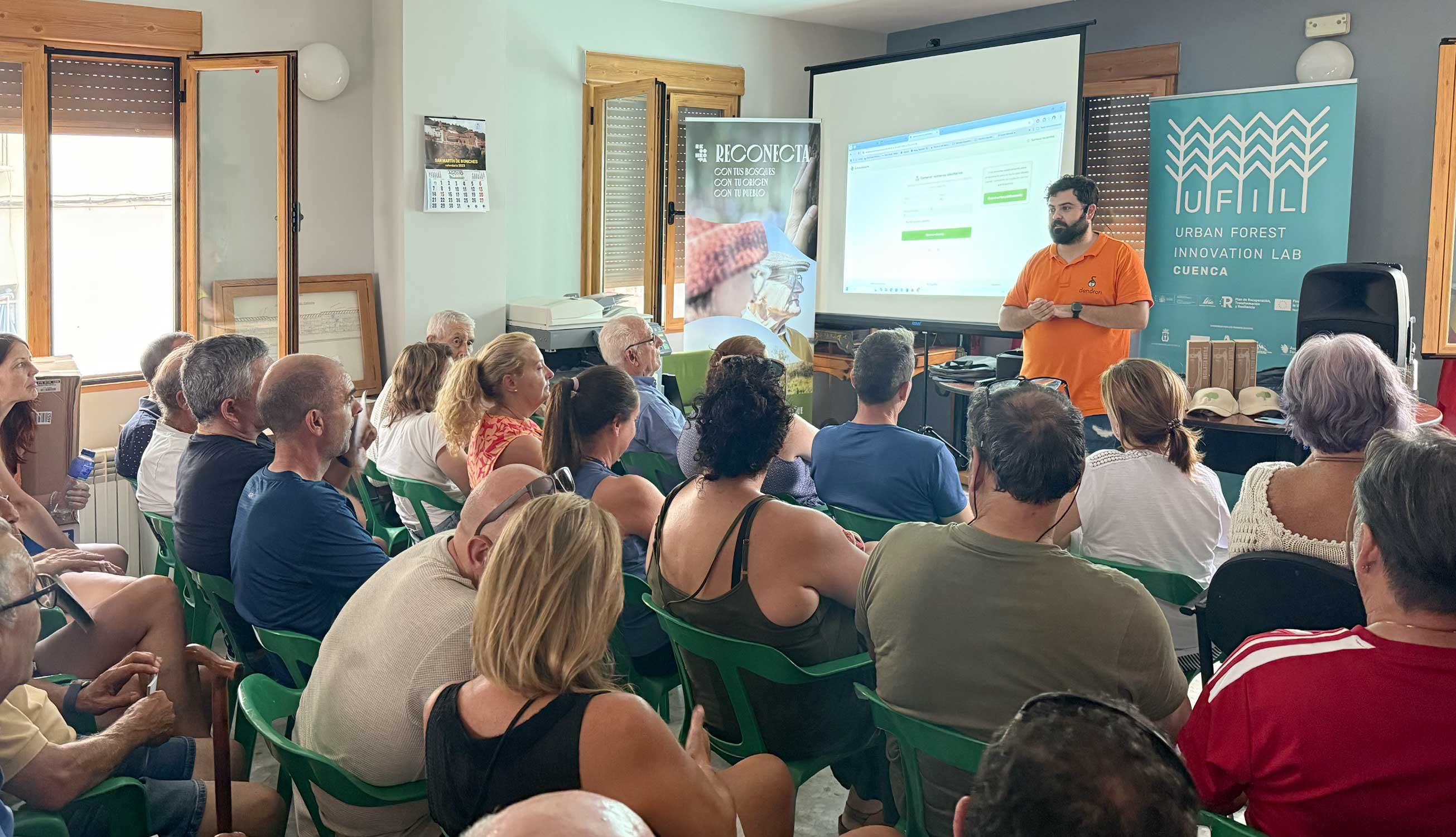
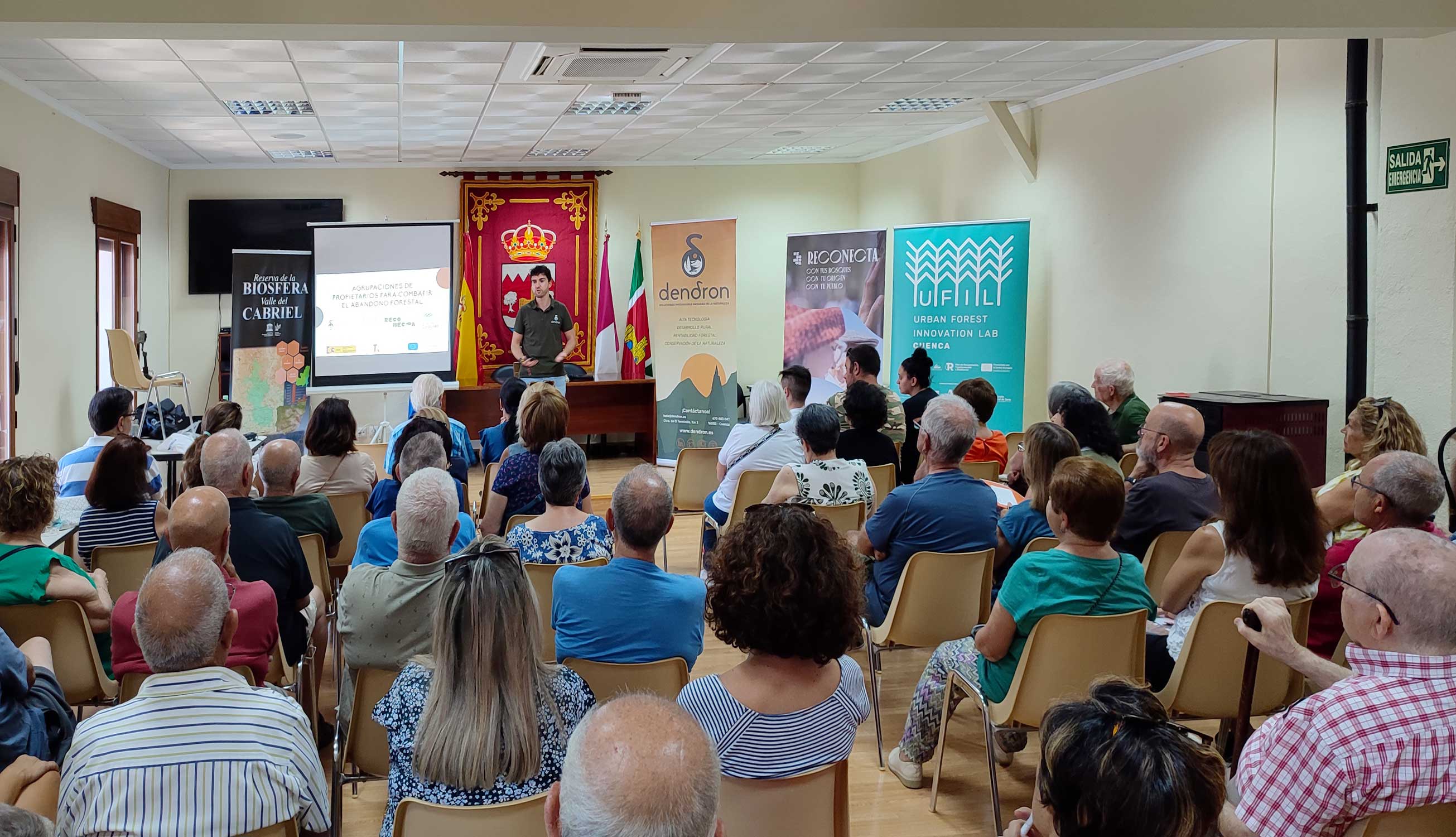
During summer 2026, this work moved directly into the municipalities through the Tour de la Sierra. Between 4 July and 28 August, 13 meetings were held, with a total attendance of 409 people.
The timing reflected a common reality in these rural areas: many forest owners live away from the municipalities where their land is located and return during the summer. The Tour used this opportunity to bring WOOD4LIFE closer to owners, explain the possibilities offered by collective management and, above all, understand the situation in each territory first-hand.
The meetings showed that there is no single starting point. In some municipalities, forest owners were interested in creating a new association. In others, the priority was to bring in new members or reactivate organisations that had become less active.
In Galve de Sorbe, for example, the meeting brought together the forest owner associations of Galve de Sorbe, Villacadima, Condemios de Arriba, Condemios de Abajo and El Ordial, with an interest in moving towards greater coordination. In Beteta, the meeting helped advance the reactivation of the existing association. In other municipalities, the meetings identified owners interested in organising collectively and helped define the next steps towards creating or strengthening collective management structures.
Beyond attendance figures, the meetings provided direct insight into the questions and barriers forest owners face: how to organise, what membership of an association involves, how to make decisions collectively, what costs forest management entails, and what opportunities exist to mobilise timber and access funding and services.
This information helps tailor the support that follows. Some territories are ready to move towards a collective management structure, while others still require further engagement. The Helpdesk and face-to-face meetings therefore play complementary roles: one provides technical support, while the other helps identify where and how that support can be most useful on the ground.
From organisation to forest management
Creating or reactivating an association is an important step, but it is not the final objective. The next challenge is for these structures to support collective decision-making, enable active forest management, facilitate timber mobilisation and connect forest owners with opportunities linked to the forest-to-wood value chain and ecosystem services.
The 2026 meetings are therefore a starting point for turning collective organisation into effective forest management. This is the transition WOOD4LIFE is supporting in Castilla-La Mancha: from fragmented ownership to a greater capacity for collective action and, progressively, from organising forest owners to actively managing their forests.